

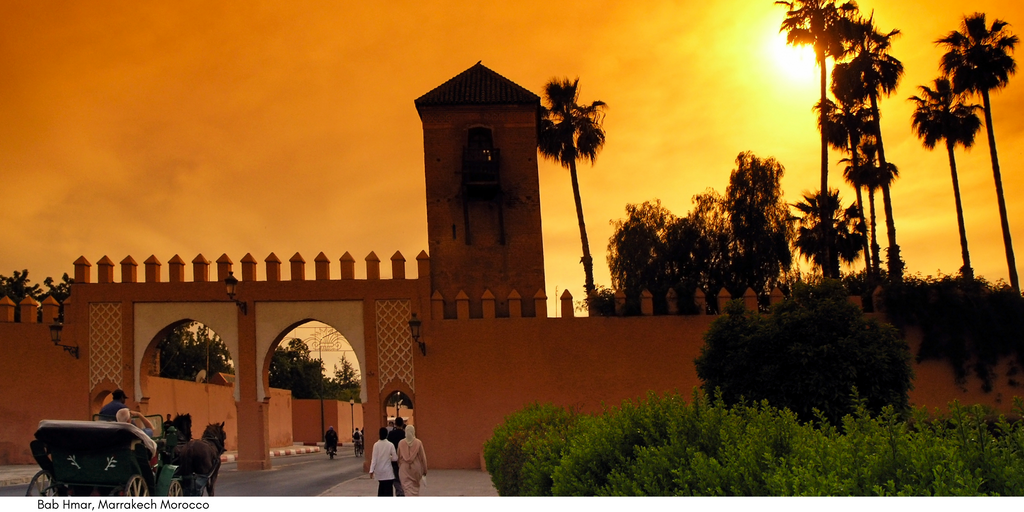
Morocco is a land rich in culture and deeply rooted traditions, and one of its most remarkable expressions is craftsmanship. Today, traditional know-how meets contemporary production methods, allowing a wide range of materials to be transformed into highly decorative and functional objects.
The History of Moroccan Craftsmanship

The cultural richness of Morocco is inseparable from its traditional craftsmanship, which has evolved over the years to include more design-oriented creations. A wide variety of materials are carefully handcrafted using tools and techniques that have remained largely traditional. From tableware and furniture to jewelry and clothing, Moroccan craftsmanship offers countless treasures that visitors are often tempted to bring home as souvenirs.
Marrakech, a city of many faces, deserves to be discovered slowly to fully appreciate its hidden secrets. It is a place with a rich past where traditions remain deeply rooted.
Urban and Rural Moroccan Art
Moroccan art can generally be divided into two major categories: urban art and rural (Berber) art.
Urban art developed in historic cities influenced by Eastern traditions and Andalusian Spain. Oriental influences are especially visible in carpet weaving, textiles, and embroidery, while Andalusian heritage lives on through ceramics, metalwork, woodworking, and leather craftsmanship.
Berber or rural art has older, more primitive origins. These handcrafted objects often serve practical purposes—furniture, tools, everyday utensils, and symbolic decorative items used in community life.
Traditional Craftsmanship in Marrakech
Craftsmanship in Marrakech is deeply rooted in tradition. Skills and creativity are passed down from one generation to the next, forming true cultural industries. Artisans are not only guardians of tradition but innovators who adapt their heritage to modern lifestyles. As a result, Marrakech craftsmanship remains vibrant, diverse, and alive.
For centuries, materials such as wood, metal, copper, wool, stone, and clay have been widely used. Adapted to modern life, Marrakech’s artisanal production offers everything from intricate filigree to simple everyday utensils.
Cities of Production

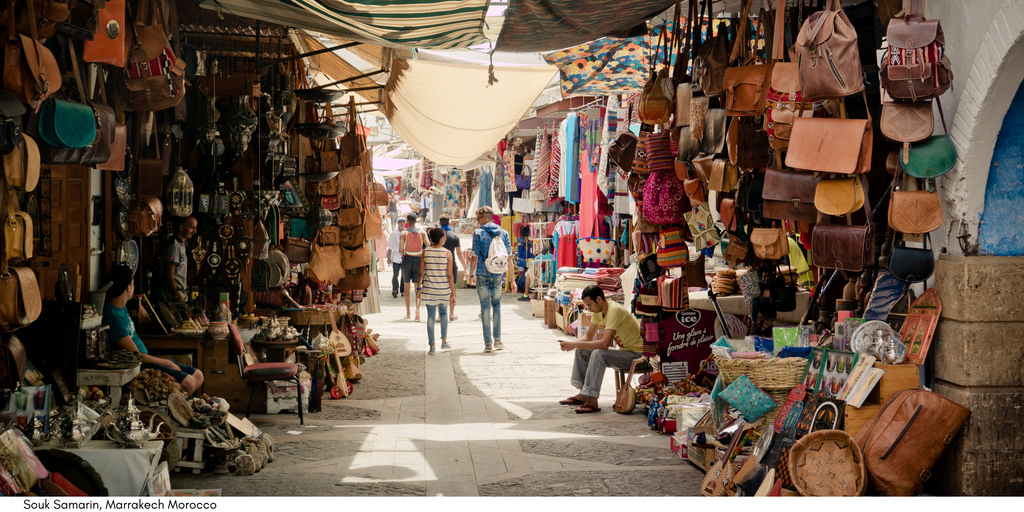
Since ancient times, cities like Marrakech and Fès have been major centers of artisanal production. Entire districts are dedicated to leather tanneries producing bags, accessories, babouches, poufs, leather-wrapped pottery, saddles, and more.
Iconic Moroccan Handmade Products
Moroccan Rugs

In regions such as Rabat, Fès, and Tetouan, Moroccan rugs take center stage in the medinas. Their complex patterns—sometimes central, sometimes along the borders—reflect the purpose and story behind each piece. The value of a Moroccan rug is closely linked to its knot density and motifs, with clear distinctions between urban and rural rugs.
Traditional Moroccan Clothing

Traditional Moroccan garments are still worn during important ceremonies and special occasions, while modern versions bring a contemporary twist. The caftan paired with babouches represents a timeless Moroccan outfit. Textile craftsmanship beautifully combines tradition with evolving fashion trends.
Babouches, in particular, have become iconic symbols of Moroccan style and are now available in countless modern and design-forward variations.
Moroccan Jewelry

Looking for handmade, authentic jewelry? Marrakech and its surroundings are rich in Amazigh (Berber) jewelry, especially in the medina near Jemaa El Fna. Silver jewelry is also crafted in cities such as Guelmim, Agadir, Essaouira, Tiznit, and Taroudant.
Gold and silver jewelry pieces are handmade by skilled artisans and sold in traditional souks. Marrakech remains one of the best places to find truly exceptional Berber jewelry.
Ceramics and Pottery

In Rabat, pottery reflects the fusion of Amazigh and Andalusian cultures. Moroccan ceramics vary by region: blue tones in Fès, yellow in Safi, and green in Meknès. Safi is especially renowned for its colorful ceramics, while Azemmour and Salé have developed strong pottery traditions of their own.
Wrought Iron and Metalwork

Metalworking is deeply ingrained in Moroccan tradition. Picture frames, lanterns, and Moroccan lamps project beautiful arabesque patterns through light and shadow. Copper, silver, and brass are widely used to create chandeliers, lanterns, mirrors, and decorative objects.
In cities like Marrakech, Fès, and Safi, wrought iron pieces integrate seamlessly into both traditional and modern interiors.
Marquetry and Thuya Wood

Essaouira is renowned for walnut wood, a precious material from the Atlas Mountains. Wood decoration has been a Moroccan specialty for centuries, particularly through marquetry and inlaid wooden objects found throughout the country.
Plaster and Zellige Tilework

Plasterwork is a key element of Moroccan architecture, especially in riads. Zellige—traditional Moroccan mosaic tilework—is another iconic art form found across the country, both in classic and modern creations. Fès is widely considered the capital of zellige craftsmanship.
Copper Objects

Cities such as Fès, Marrakech, and Tetouan are famous for copper craftsmanship. Frames, pots, door knockers, lamps, and decorative items are finely worked in copper, silver, or brass. Today, many Moroccan designers reinterpret these traditional objects in modern forms.
Tanneries, Leather, and Leather Goods

In the old medinas—especially in Fès—leather goods dominate the souks. The historic tanneries of Fès, resembling colorful watercolor palettes, process cow, goat, and sheep hides. Jackets, shoes, bags, and leather accessories are among the most iconic Moroccan handcrafted products.

Traditional Tajine Cookware

Fès and Safi are known for producing traditional Moroccan tajine cookware. The tajine is named after the clay pot in which it is cooked—made entirely of heavy clay, sometimes painted or glazed. It consists of a flat base and a conical or domed lid designed for slow cooking.
Handmade Pottery Products
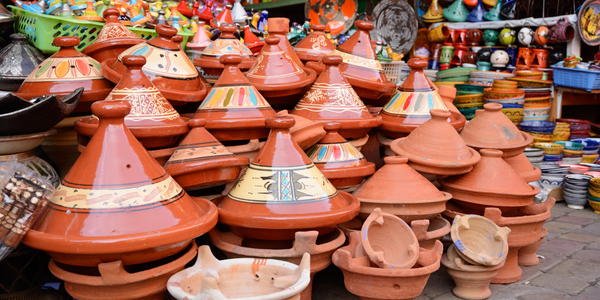
During cooking, the lid remains in place while heat and condensation slowly cook the ingredients. Moroccan tajines are slow-cooked dishes that create tender meats and richly flavored vegetables. Other pottery items include vases, bowls, and garden pots, often beautifully hand-painted.
Stone and Mineral Crafts

Soft stone from Taroudant is used to craft engraved candleholders and decorative boxes. Semi-precious stones such as quartz, amethyst, and manganese crystal are commonly sold along mountain roads.
Embroidery and Textiles

The most famous embroidery comes from Fès, known for its deep blue tones, though embroidery from Rabat, Salé, Meknès, Azemmour, and Tetouan is equally renowned. Moroccan rugs are typically classified as either rural or urban, each with distinct characteristics.
Moroccan Art: A Living Heritage
Moroccan art has evolved in harmony with traditional architecture, allowing artisans to create remarkable masterpieces. It goes without saying that Morocco offers an extraordinary variety of high-quality handcrafted products—many of which are produced in historic cities such as Fès and Marrakech.
0 comments